


Make Sure You Have The Right Tires For Towing
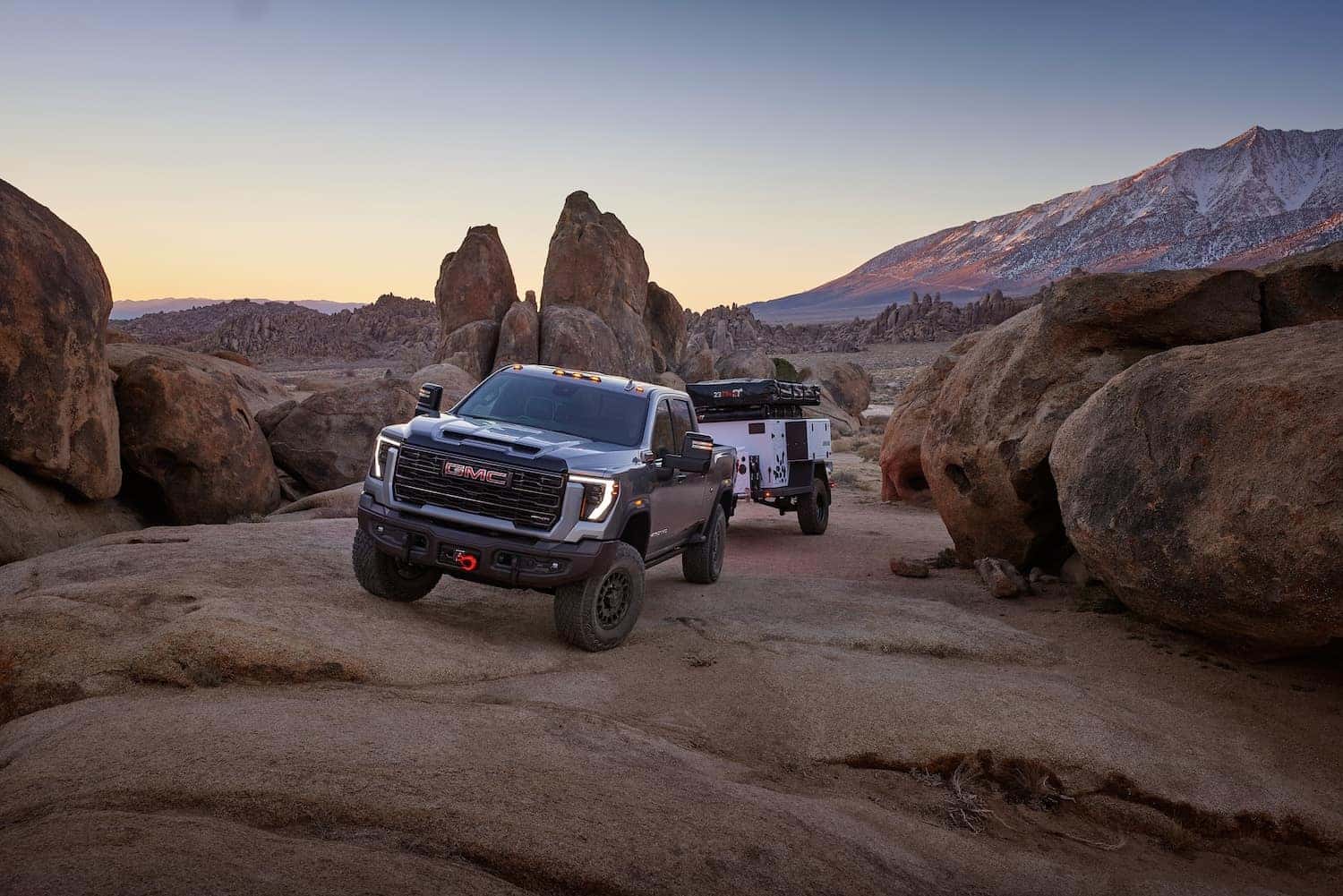 Technology has brought many towing aids to modern trucks. They can help you line up to your hitch, back up to your desired position, give you a view behind your trailer, and so on. There have also been drivetrain and suspension enhancements and specific towing drive modes that help coordinate several systems to optimize the towing experience. Still, this may be a good time to remember that for all the truck’s engineering and technology, its only direct contact with the outside world is still through the tires. It is vital that your tires are up to the mission of towing, and Ewing GMC of Plano offers the following information and guidelines.
Key things to keep in mind are the tire type, load index, and ply. These are all stated explicitly on the large embossed type on the side wall. As a quick reminder, here is how to decode what that sidewall type says:
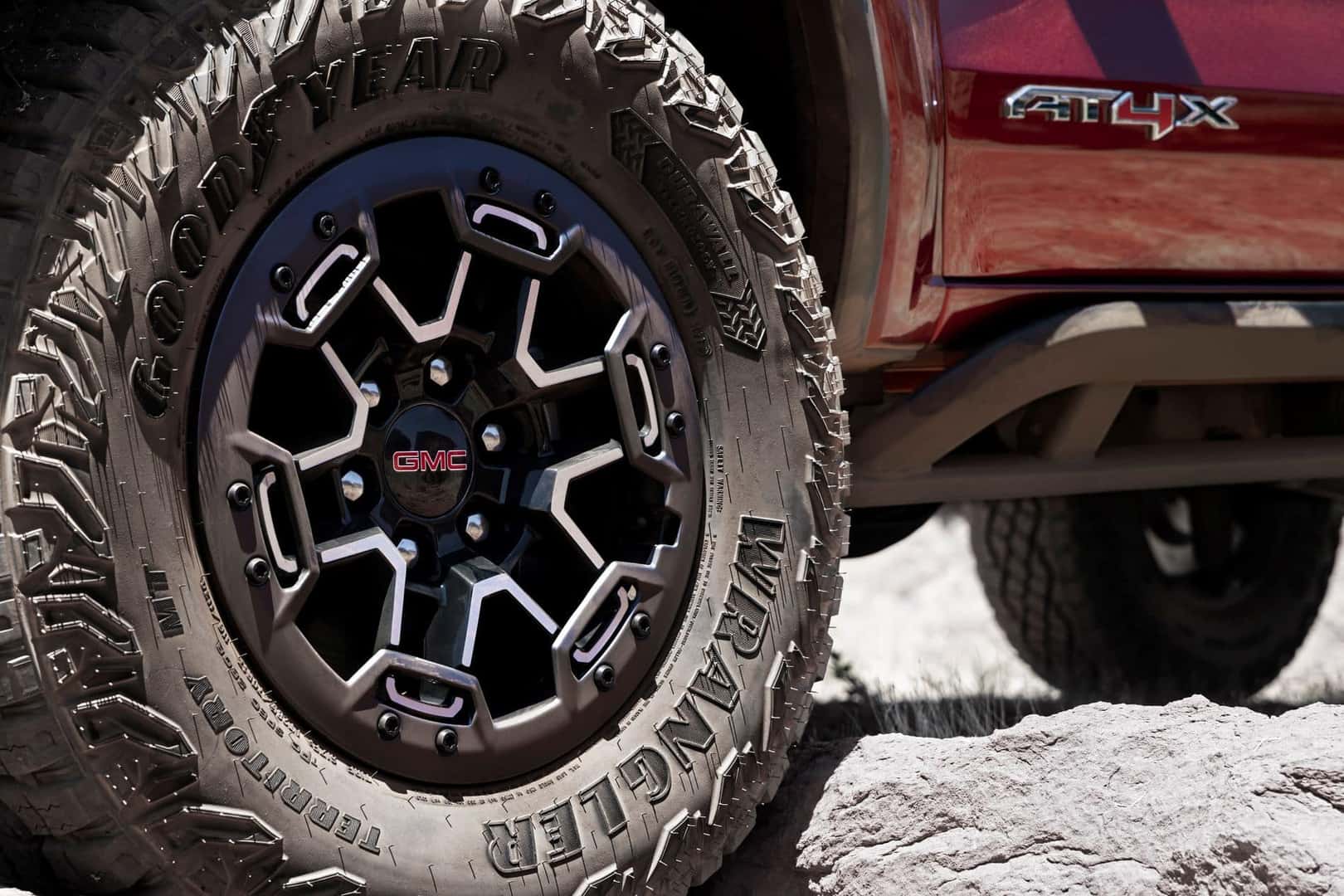 Example: LT 265 / 70 R 17 121/118 S 10PR
LT: Tire type: This gives the tire’s primary purpose and the vehicle type it should be applied to. “LT” in this case means “Light truck.” That doesn’t mean a Canyon instead of a Sierra, but rather a conventional non-commercial truck, which would include both the Canyon and Sierra model lines, including heavy-duty trucks. Other examples include “P” for passenger cars, AT for All Terrain, and, in some cases, HT for Highway Tire. LT tires are designed to handle heavier loads than P tires. LT and HT are generally recommended for highway towing. AT can be appropriate if a significant amount of off-pavement driving is anticipated.
265 – Tire Width: This indicates that the tire is 265 mm wide.
70: Aspect Ratio – This is the size of the sidewall as a percentage of the width size. “70” indicates the sidewall is 70% as tall as the width. Thus, it measures how “fat” a tire is. The lower the aspect ratio, the fatter the tire. Since the width of this tire is 265, the sidewall would be 185.5 mm tall.
R: Tire Construction – This refers to how the layers within the tire are constructed. Most modern tires are radials, and they are best for towing and most other uses. The other construction method is “Bias Ply,” which refers to the ply or layers of the construction laid out crosswise from each other. Before radial tires, all vehicle tires used to be bias ply. Now, they are mainly used for motorcycles and non-vehicle use.
17: Wheel Diameter – The “17” indicates this tire can only be applied to a 17-inch diameter wheel.
121/118: Load Index – This gives a tire’s maximum safe carrying capacity when inflated to its maximum pressure. The higher the load index, the better they can handle heavy loads, including the added weight of towing a trailer along with the GVWR (Gross Weight Vehicle Rating) that includes the weight of the vehicle, fuel, all contents in the bed and cabin including occupants, plus the tongue weight of the trailer. The Load index of all the tires should be greater than the GVWR by a healthy margin. The first figure indicates the index for a tire on its own, while the second indicates the figure when the tire is paired with another in a dualie arrangement. The chart below translates the tire index to the actual load in pounds.
S: Speed Rating – This indicates the maximum velocity at which the tires should be taken. “S” in this case translates to 112 mph. Modern tires have speed ratings ranging from L to Y in alphabetical order, with corresponding speed ratings of 75 to 186 mpg. While you will likely see R (106 mph) or higher on LT tires, almost all speed ratings will be high enough for towing.
10PR: Ply or Load Range – Not found on all tires. This indicates the tire’s carrying capacity in the number of plies in the tire. The higher the ply rating, the more durable the tire. When buying tires for your tow vehicle, remember that the load index and range must meet or exceed the recommendation on your driver’s side door placard or owner’s manual.
Load Index to Pounds
| LOAD | LOAD | LOAD | LOAD | LOAD | LOAD |
| INDEX | (lb) | INDEX | (lb) | INDEX | (lb) |
| 65 | 639 | 94 | 1477 | 123 | 3417 |
| 66 | 661 | 95 | 1521 | 124 | 3527 |
| 67 | 677 | 96 | 1565 | 125 | 3638 |
| 68 | 694 | 97 | 1609 | 126 | 3748 |
| 69 | 716 | 98 | 1653 | 127 | 3858 |
| 70 | 739 | 99 | 1709 | 128 | 3968 |
| 71 | 761 | 100 | 1764 | 129 | 4079 |
| 72 | 783 | 101 | 1819 | 130 | 4189 |
| 73 | 805 | 102 | 1874 | 131 | 4299 |
| 74 | 827 | 103 | 1929 | 132 | 4409 |
| 75 | 853 | 104 | 1984 | 133 | 4541 |
| 76 | 882 | 105 | 2039 | 134 | 4674 |
| 77 | 908 | 106 | 2094 | 135 | 4806 |
| 78 | 937 | 107 | 2149 | 136 | 4938 |
| 79 | 963 | 108 | 2205 | 137 | 5071 |
| 80 | 992 | 109 | 2271 | 138 | 5203 |
| 81 | 1019 | 110 | 2337 | 139 | 5357 |
| 82 | 1047 | 111 | 2403 | 140 | 5512 |
| 83 | 1074 | 112 | 2469 | 141 | 5677 |
| 84 | 1102 | 113 | 2535 | 142 | 5842 |
| 85 | 1135 | 114 | 2601 | 143 | 6008 |
| 86 | 1168 | 115 | 2679 | 144 | 6173 |
| 87 | 1201 | 116 | 2756 | 145 | 6393 |
| 88 | 1235 | 117 | 2833 | 146 | 6614 |
| 89 | 1279 | 118 | 2910 | 147 | 6779 |
| 90 | 1323 | 119 | 2998 | 148 | 6944 |
| 91 | 1356 | 120 | 3086 | 149 | 7165 |
| 92 | 1389 | 121 | 3197 | 150 | 7385 |
| 93 | 1433 | 122 | 3307 |
Load Range and Ply Rating
| LOAD
RANGE |
PLY
RATING |
| A | 2 |
| B | 4 |
| C | 6 |
| D | 8 |
| E | 10 |
| F | 12 |
Choosing Tires
We won’t go into brands, but when selecting a tire for a tow vehicle, the recommendation is for LT or HT tires. AT tires can also be used if the vehicle is expected to encounter rugged off-pavement conditions, but fuel mileage will be lower, and they are likely to be louder on the highway. Make sure that the load range and index should meet or exceed the manufacturer’s recommendation for your vehicle.
Ideally, all your tires will be the same, so their traction traits in various conditions will be consistent. Never mix radial and bias-ply tires, as they handle differently and could destabilize your vehicle. Otherwise, they can be mixed if all tires offer equal weight capacity and have adequate tread.
If you have additional questions about your tires, do not hesitate to ask someone in the Ewing GMC of Plano service staff.
0 comment(s) so far on Make Sure You Have The Right Tires For Towing