



Sierra vs Canyon: Which GMC Pickup Is For You?
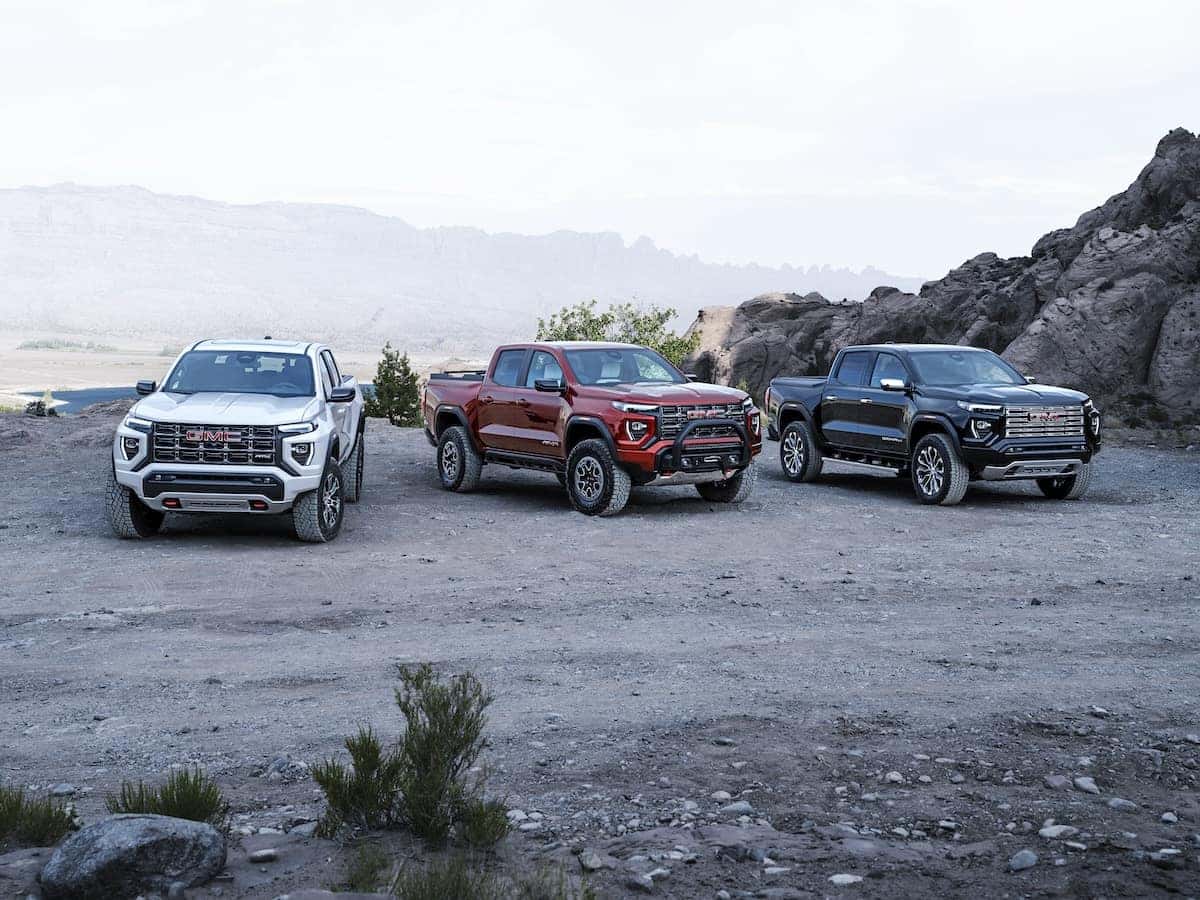 The pickup truck world was here before. In the mid-80s, GMC and several other manufacturers had smaller pickups for those who wanted something a bit less thirsty than the full-size trucks that had long been the standard. Picking between them was much easier back then. The small trucks were compact, so the size difference between them and full-size trucks was more significant. The compacts mostly had non-turbocharged 4-cylinder engines with moderate power, while the staple in the full-size trucks was a standard 6-cylinder, with most being purchased with V-8s. Creature comforts were limited in both sizes of trucks back then, but the few available were more likely on the full-size trucks. Four-door models were rare on the full-size trucks and non-existent for the compacts, so having the trucks double as family vehicles was problematic for the full-size trucks and essentially impossible for the compacts.
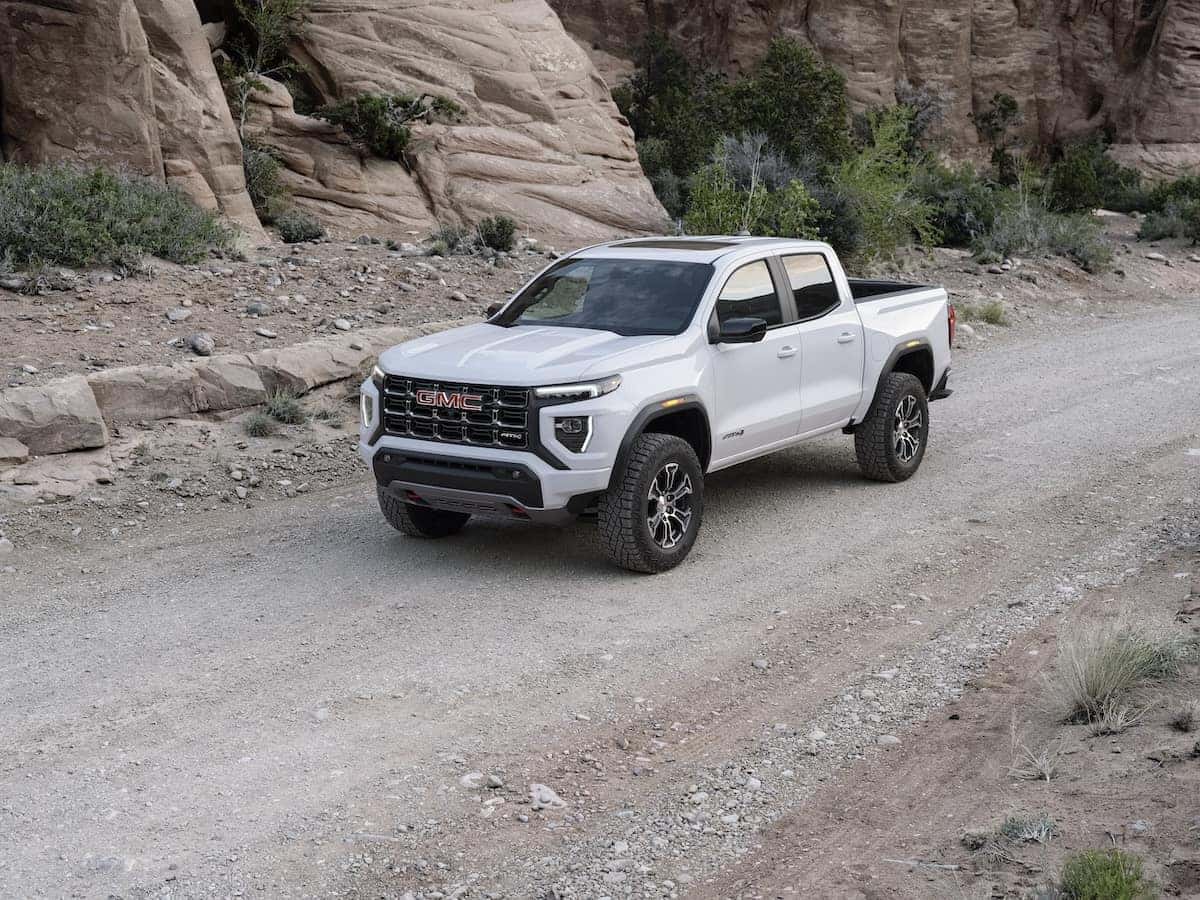
The difference isn’t so great these days. Compacts like GMC’s Canyon have grown to mid-size. Full-size trucks like the Canyon have grown to…well…fuller size. But the Canyon can carry 1,640 pounds and tow up to 7,700 pounds, which is pretty robust. Then again, the Sierra has a maximum payload of 2,287 pounds and can tow up to 9,400 pounds. There is less disparity between the engines. The Canyon still has a 4-cylinder engine, but it is turbocharged to produce power that those earlier small trucks of decades past could only dream of. The Sierra 1500 now comes standard with the same engine. While the cabin in the Sierra is undoubtedly more spacious, both models can carry five people. So, unless you know your needs fall beyond the capability of the Canyon, the decision of which GMC truck is right for you may be a little more complicated. This Ewing GMC of Plano blog post won’t tell you which to get, but it does hope to add some perspective to your decision.

The Sierra 1500 can be seen as the default choice. Chances are, unless you have some very heavy-duty needs that you already know about, the Sierra’s size, payload, and towing capacity will have you covered. If you know you don’t need a second set of doors, a 2-door Regular Cab is available, and you also have a choice of short (70”), standard (80”), or long (98”) beds.

Engine choices start with a 2.7-liter turbocharged inline 4 producing 310 horsepower and 430 lb-ft of torque, which is connected to an 8-speed automatic. The next step bypasses six cylinders and goes straight to a 5.3-liter V8, which produces 355 horsepower and 383 lb-ft of torque and is connected to a 10-speed automatic. You can also opt for the 6.2-liter V8 with 420 hp and 460 lb-ft of torque. It is also paired with the 10-speed and is only available with 4-wheel drive. Of course, if you are considering this engine, you have probably already ruled out the Canyon.
By contrast, the Canyon is one size fits all, with a 4-door cab and a 61.7-inch-long bed. If you are considering the space in your garage, at 213 inches, the Canyon is 19 inches shorter than a Sierra 1500 CrewCab with a short bed. The Canyon is also about 9 inches narrower, which may be the difference between walking or side-stepping next to it in the garage.
 All Canyons are powered by the same 2.7-liter turbocharged inline-4 that powers the base Sierra with the same 310 horsepower and 430 lb-ft of torque and the same 8-speed automatic transmission. On the 4×2 Canyons, this powertrain has an EPA city/highway/combined mpg estimate of 18 / 23 / 20. For the Sierra, it is nearly the same at 18 / 22 / 20. 4×4 figures for the Canyon and Sierra are 17 / 22 / 20 and 17 / 20 / 18 respectively.
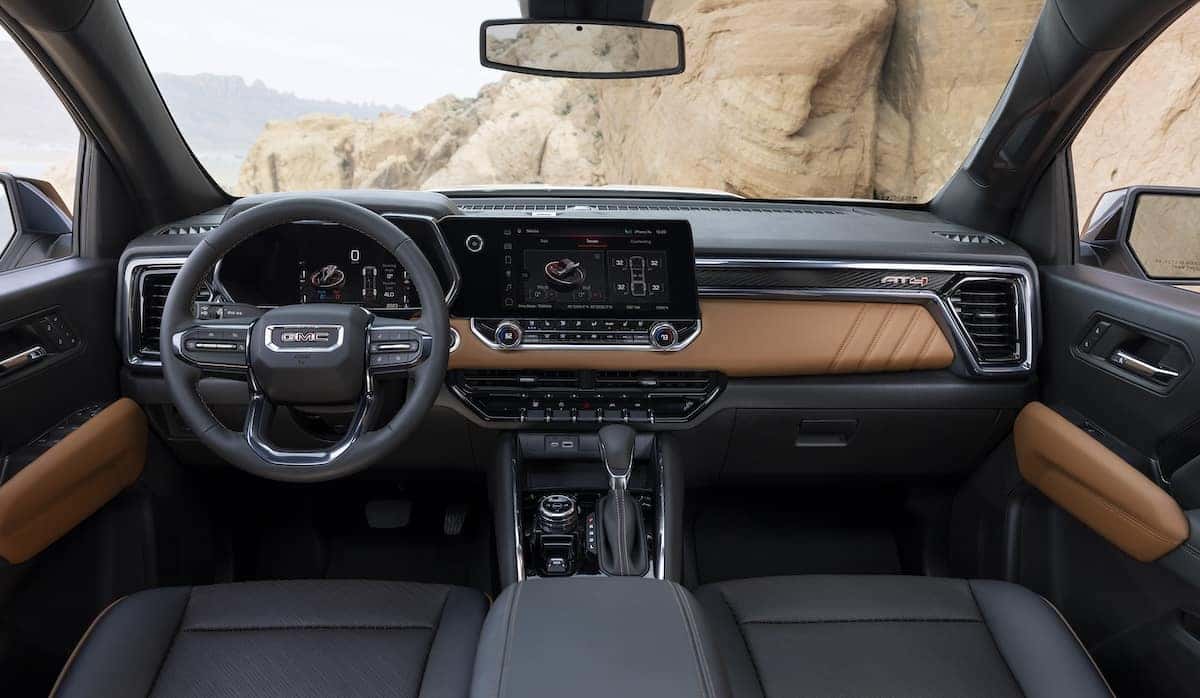
Unlike those trucks of decades ago, both the Canyon and Sierra can include just about every creature comfort you can find in sedans or SUVs, including a standard 11.3-inch touchscreen in the Canyon and a proportionally larger 13.4-inch screen for the Sierra. Both are backed by the feature-packed Google Built-in operating system featuring wireless Apple and Android compatibility and standard Google Maps navigation. Both trucks are available in Denali trims, which can really make things plush.

That said, GMC reserves some special items for the big truck. The versatile MultiPro Tailgate is only available on the Sierra, as is the SuperCruise true hands-free driving system.
Then there is the cost. Both model lines have a wide price range, but at $37,995, the starting MSRP for the Canyon is $7,400 less than a CrewCab short-bed Sierra Pro with the same drivetrain. So, you will want to ask yourself if you need the Sierra’s additional space.
That can’t be answered here, but it gives you an excellent reason to visit Ewing GMC of Plano and shop both the Canyon and Sierra back to back.
0 comment(s) so far on Sierra vs Canyon: Which GMC Pickup Is For You?